Credit Card Hardship Program 2026: How It Works, Who Qualifies and How to Apply
Unexpected expenses, job loss, medical emergencies, or reduced income can make credit card payments difficult to manage. When monthly bills become overwhelming, a credit card hardship program may provide temporary financial relief and a more manageable repayment arrangement.
Many credit card companies offer assistance to customers experiencing financial difficulties. Depending on the lender and account history, this assistance may include reduced interest rates, lower monthly payments, waived fees, or temporary payment arrangements.
However, these programs have specific conditions, and not every cardholder automatically qualifies. Understanding the eligibility requirements, application process, and potential impact on your credit can help you choose a suitable repayment strategy.
The Consumer Financial Protection Bureau (CFPB) recommends that consumers struggling with credit card payments contact their card issuer as early as possible to discuss available repayment assistance options. You can also review the CFPB’s resources on managing credit card debt and contacting your card issuer to understand your available options before making a decision.
This guide explains how hardship programs work, what assistance may be available, and how to approach your credit card company when you are struggling with payments.
What Is a Credit Card Hardship Program?
A credit card hardship program is a repayment assistance arrangement offered by a credit card issuer to customers facing financial difficulties. It allows eligible borrowers to request modified payment terms that better match their current financial circumstances.
These programs are generally intended for people who want to repay their outstanding balances but cannot afford their existing interest rates or minimum monthly payments.
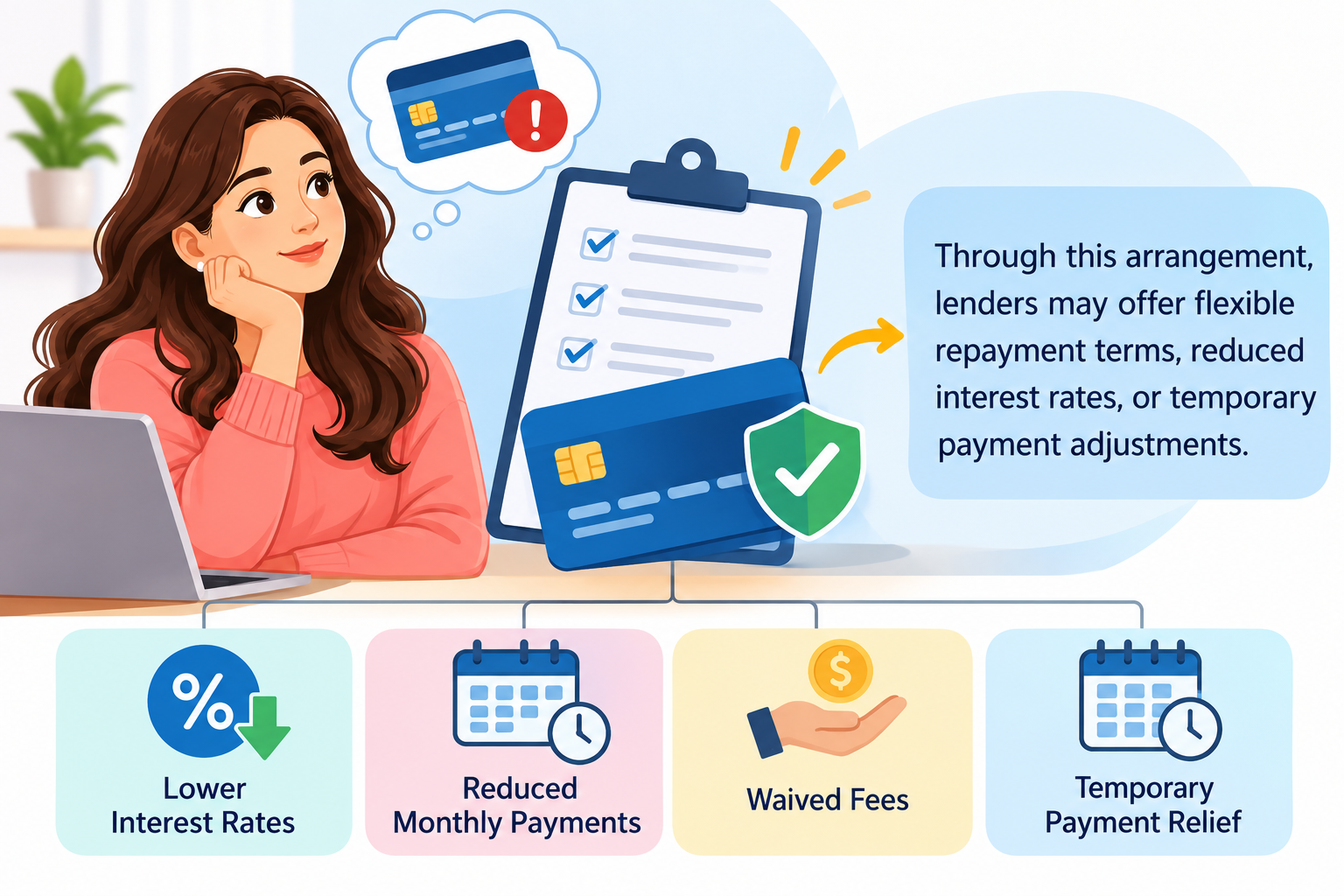
A credit card hardship program helps individuals manage credit card payments when unexpected financial challenges affect their ability to pay. Through this arrangement, lenders may offer flexible repayment terms, reduced interest rates, or temporary payment adjustments. It gives borrowers additional time and financial flexibility to address their outstanding balances.
It is important to understand that hardship assistance generally does not eliminate your credit card debt. You will usually remain responsible for repaying the outstanding balance under the revised terms.
How Does a Credit Card Hardship Program Work?
The process usually begins when you contact your credit card issuer and explain why you are having difficulty making payments.
The lender reviews your financial circumstances and determines whether you qualify for any available assistance. It may ask about your income, employment status, monthly expenses, outstanding balances, and the reason behind your financial difficulties.
If approved, the issuer may present one or more repayment options.
Here is how the common arrangements work:
1. Reduced Interest Rates
High credit card interest rates can make repayment difficult because a considerable portion of each monthly payment goes toward interest rather than reducing the principal balance.
A hardship arrangement may temporarily lower your APR, allowing more of your payment to go toward the amount you owe.
2. Lower Monthly Payments
If your current minimum payment is difficult to afford, your credit card company may offer a reduced monthly payment.
This arrangement can help borrowers manage essential expenses while continuing to repay their outstanding debt.
3. Temporary Payment Deferment
Some issuers may allow qualified borrowers to postpone payments for a specified period.
However, ask whether interest will continue accumulating during the deferment. A payment pause does not necessarily reduce your outstanding balance.
4. Fixed Repayment Arrangements
Certain hardship plans replace regular revolving payments with a structured repayment schedule.
You may receive a fixed monthly payment and a defined repayment period, making it easier to plan your finances.
5. Fee Reductions or Waivers
Depending on the lender's policies, some customers may qualify for reduced or waived late fees and other account charges.
These benefits are not guaranteed, so confirm the available relief before accepting an arrangement.
Who Qualifies for a Credit Card Hardship Program?
There is no single universal eligibility requirement.
Each credit card issuer determines its own criteria, and qualification may depend on the account history, financial circumstances, and the specific assistance program available.
Common situations that may lead someone to request hardship assistance include:
However, experiencing financial hardship does not automatically guarantee approval.
The credit card issuer may determine that the borrower does not qualify, may offer a different arrangement, or may require documentation.
The best approach is to contact the issuer as soon as you realize that making future payments may become difficult.
Waiting until the account has already become seriously delinquent can reduce your options.
What Can a Credit Card Hardship Program Offer?
The potential benefits vary by lender and individual circumstances.
The most important question to ask is:
"What happens to my account and my credit report if I accept this program?"
Never agree to a hardship arrangement without understanding the full terms.
Credit Card Hardship Program vs. Other Debt Relief Options
A hardship program is only one potential solution.
The right option depends on how much debt you have, your income, your ability to make payments, and how severe your financial hardship is.
A credit card hardship program is often worth investigating before considering more aggressive debt-relief options because it allows borrowers to work directly with their existing creditor.
The CFPB specifically recommends starting with the credit card company when struggling with credit card debt and asking about available repayment options.
Credit Card Hardship Program vs. Debt Settlement
These two options are frequently confused, but they are fundamentally different.
With a hardship program, the borrower generally continues working with the credit card company to repay the debt.
With debt settlement, a company or individual may negotiate with creditors to accept less than the total amount owed.
Hardship Program
- You generally continue making payments
- The creditor modifies the repayment terms
- The balance usually remains fully owed
- Interest may be reduced
- The account may be restricted or closed
Debt Settlement
- The debt may be negotiated for less than the full balance
- The borrower may stop making payments in some settlement strategies
- Accounts can become delinquent
- Credit damage can occur
- Collection activity may increase
- Fees may apply
For borrowers who can realistically repay their debt if the interest rate or payment structure is modified, a hardship program may be a less disruptive option to investigate first.
How to Apply for a Credit Card Hardship Program
Before contacting your lender, it can help to understand your rights and available options. The Consumer Financial Protection Bureau’s credit card assistance resources provide information about communicating with credit card companies, handling payments, and addressing financial difficulties.
Step 1: Contact Your Credit Card Company
Call the number on the back of your credit card or use the issuer's official customer-service channel.
Ask specifically about:
- Financial hardship assistance
- Payment assistance
- Hardship programs
- Reduced-interest repayment plans
- Forbearance options
The CFPB maintains consumer resources and a database of credit card agreements, but the exact hardship options available to you will generally need to be confirmed directly with your issuer.
Step 2: Explain Your Situation
Be honest and specific.
Explain:
- What caused the hardship
- When it began
- How long you expect it to last
- Your current income
- Your essential monthly expenses
- What payment you can realistically afford
Step 3: Ask What Options Are Available
Don't assume the first option offered is the only one.
Ask:
"Do you have any financial hardship or payment assistance programs that could reduce my interest rate or monthly payment?"
You can also ask:
"Are there any long-term repayment options available if I can no longer afford the current APR?"
Step 4: Understand the Consequences
Before accepting, ask:
- Will my card be closed?
- Can I continue using the card?
- Will the APR change?
- How long will the reduced rate last?
- What will my new monthly payment be?
- Will interest continue during a payment pause?
- How will the arrangement be reported to credit bureaus?
- What happens if I miss a payment under the program?
- What happens when the program ends?
Step 5: Get the Terms in Writing
Never rely solely on a verbal explanation.
Request written confirmation of the:
- Interest rate
- Payment amount
- Program duration
- Account status
- Fees
- Credit reporting treatment
- Consequences of missed payments
Does a Credit Card Hardship Program Hurt Your Credit Score?
There is no universal answer.
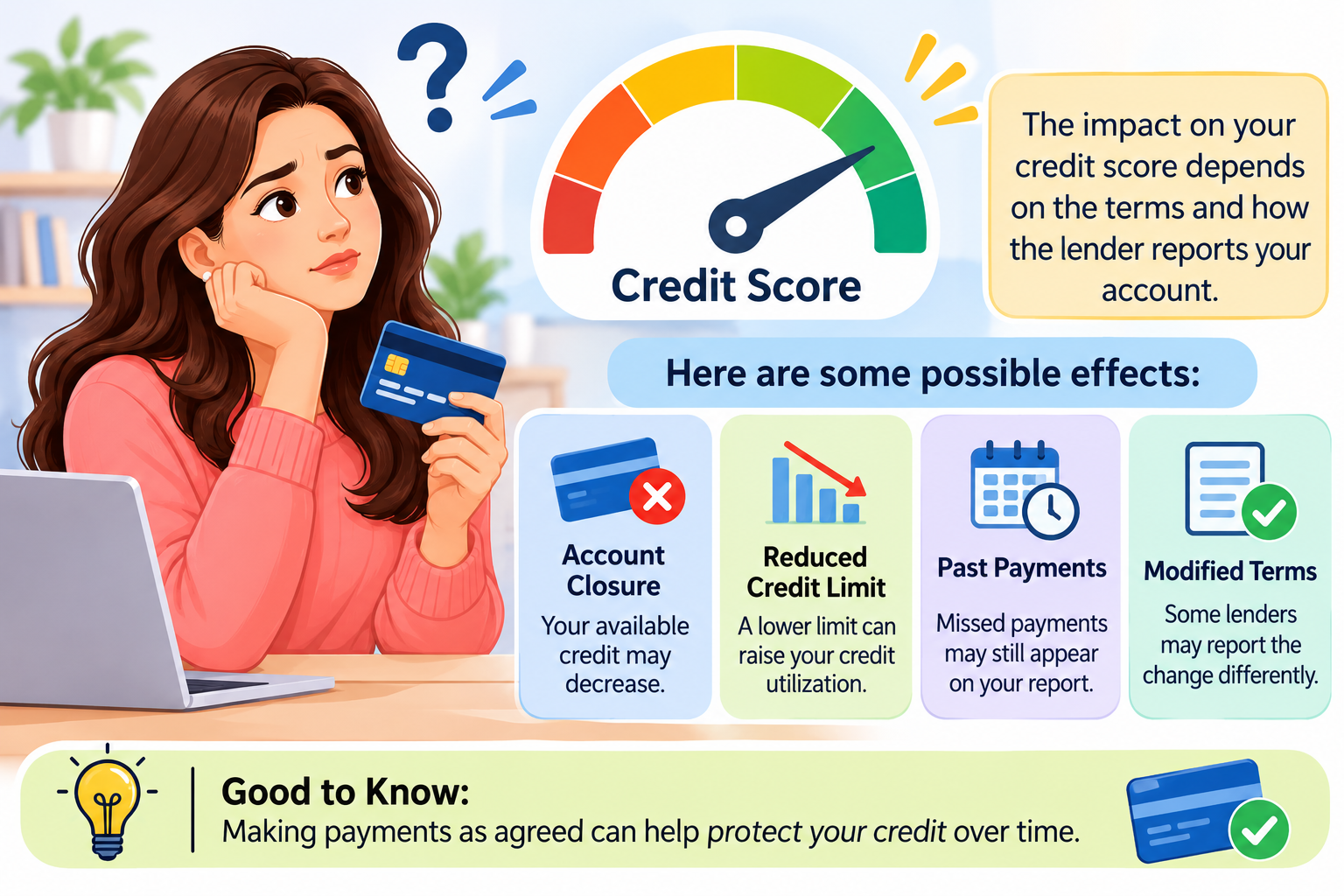
The effect depends on the specific program and how the credit card issuer reports the account to the credit bureaus.
Some hardship arrangements may involve:
- Closing the account
- Freezing the account
- Reducing the credit limit
- Changing payment terms
- Reporting the account differently
Even if the hardship arrangement itself does not directly cause a major score drop, closing an account or reducing available credit can affect your credit utilization ratio.
On the other hand, successfully maintaining an agreed repayment plan may be preferable to allowing the account to become seriously delinquent.
The key is to ask the issuer before enrolling:
"How will this program be reported to the credit bureaus?"
This is one of the most important questions borrowers should ask.
If you notice incorrect information after entering a hardship arrangement, you have the right to review and dispute inaccurate information. The CFPB explains the process for checking and disputing errors on your credit report and provides guidance on dealing with credit reporting issues.
What Happens After a Credit Card Hardship Program Ends?
The end of a hardship program is just as important as the beginning.
When the program expires, one of several things may happen:
Scenario 1: The Account Returns to Standard Terms
Your interest rate may return to the normal APR, and your payment structure may revert to the original agreement.
Scenario 2: The Account Remains on a Fixed Repayment Plan
You may continue making payments until the balance is completely repaid.
Scenario 3: The Account Is Closed
Some programs may require the card to be closed or prevent further purchases while you repay the existing balance.
Scenario 4: You Need Another Solution
If the hardship continues, you may need to consider:
- Nonprofit credit counseling
- A debt management plan
- Debt consolidation
- Debt settlement
- Bankruptcy consultation in severe cases
The most important thing is to use the hardship period to reduce the underlying balance, not simply postpone the problem.
The Biggest Mistakes to Avoid
1. Waiting Until the Account Is Seriously Delinquent
The earlier you communicate with your creditor, the more options you may have.
2. Assuming Every Issuer Offers the Same Program
Hardship assistance is not standardized.
One credit card company may offer a reduced-rate repayment plan while another may offer only temporary payment assistance.
3. Assuming "Hardship" Means Debt Forgiveness
It usually does not.
Most programs still require the borrower to repay the balance.
4. Ignoring What Happens to the Card
A lower interest rate may come with restrictions on new purchases or account closure.
5. Focusing Only on the Monthly Payment
A lower monthly payment can be helpful, but you should also calculate the total amount you will repay.
6. Not Asking About Credit Reporting
Always ask how the program will appear on your credit report.
7. Continuing to Spend on Other Credit Cards
If the underlying issue is a structural budget deficit, reducing the APR on one card may not solve the problem.
The long-term solution requires addressing the reason the debt accumulated in the first place.
Conclusion
Managing credit card debt can become challenging when unexpected financial circumstances affect your income or monthly budget. A credit card hardship program may provide a practical repayment option by reducing interest rates, adjusting monthly payments, or offering temporary payment relief.
However, approval depends on the credit card issuer, account history, and individual financial circumstances. Before enrolling, carefully review the repayment terms, account restrictions, credit reporting practices, and total repayment cost.
Contact your credit card company as soon as you anticipate payment difficulties. If a hardship arrangement does not provide enough relief, consider speaking with a nonprofit credit counselor about other available debt management strategies.
The right repayment approach can help you address outstanding balances while working toward greater financial stability.
Frequently Asked Questions
1. What is the easiest way to get a credit card hardship program?
Contact your credit card issuer directly and explain your financial difficulties. Ask about available hardship assistance, reduced-interest repayment plans, and lower monthly payment options. Approval depends on the issuer's policies and your financial circumstances.
2. Can I qualify for a credit card hardship program with bad credit?
Potentially, yes. Eligibility is not based on credit score alone. Some issuers consider your account history, income, financial difficulties, and repayment capacity when reviewing requests.
3. How long does a credit card hardship program last?
There is no standard duration across all lenders. Some arrangements provide short-term relief, while others involve longer repayment schedules. Ask your issuer about the exact duration and what happens when the arrangement expires.
4. Does a hardship program eliminate credit card debt?
Generally, no. Most hardship arrangements modify interest rates, monthly payments, or repayment schedules. Borrowers usually remain responsible for repaying their outstanding balances.
5. Can I request hardship assistance if I have already missed payments?
Yes, you can still contact your credit card issuer and ask about available repayment assistance. However, approval and available options depend on the lender and your account status.